Home › Everyday habits › Gut health
Gut health
Also: digestive health, gut microbiome (related term)
What it is and how it works
"Gut health" is not a medical diagnosis but an everyday phrase. It usually covers two things. The first is digestion itself: eating without discomfort, absorbing nutrients and having bowel movements that feel normal for you. The second is the gut microbiome, the trillions of bacteria, yeasts and other microorganisms that live mainly in the large intestine.
These microbes feed largely on what we cannot digest ourselves, especially fiber and certain starches. As they ferment it, they produce gases and short-chain fatty acids, some of which are used by the cells lining the colon. The composition of the microbiome differs greatly from one person to another and shifts with diet, age, travel, illness and medicines such as antibiotics.
Prebiotics, probiotics and fermented foods
These words are often used loosely:
- Prebiotics are food components, mostly certain fibers, that are fermented by gut bacteria. Onions, leeks, garlic, asparagus, oats, bananas and legumes contain them.
- Probiotics are live microorganisms. The term is tightly regulated in some countries, and many products sold with it cannot make specific claims.
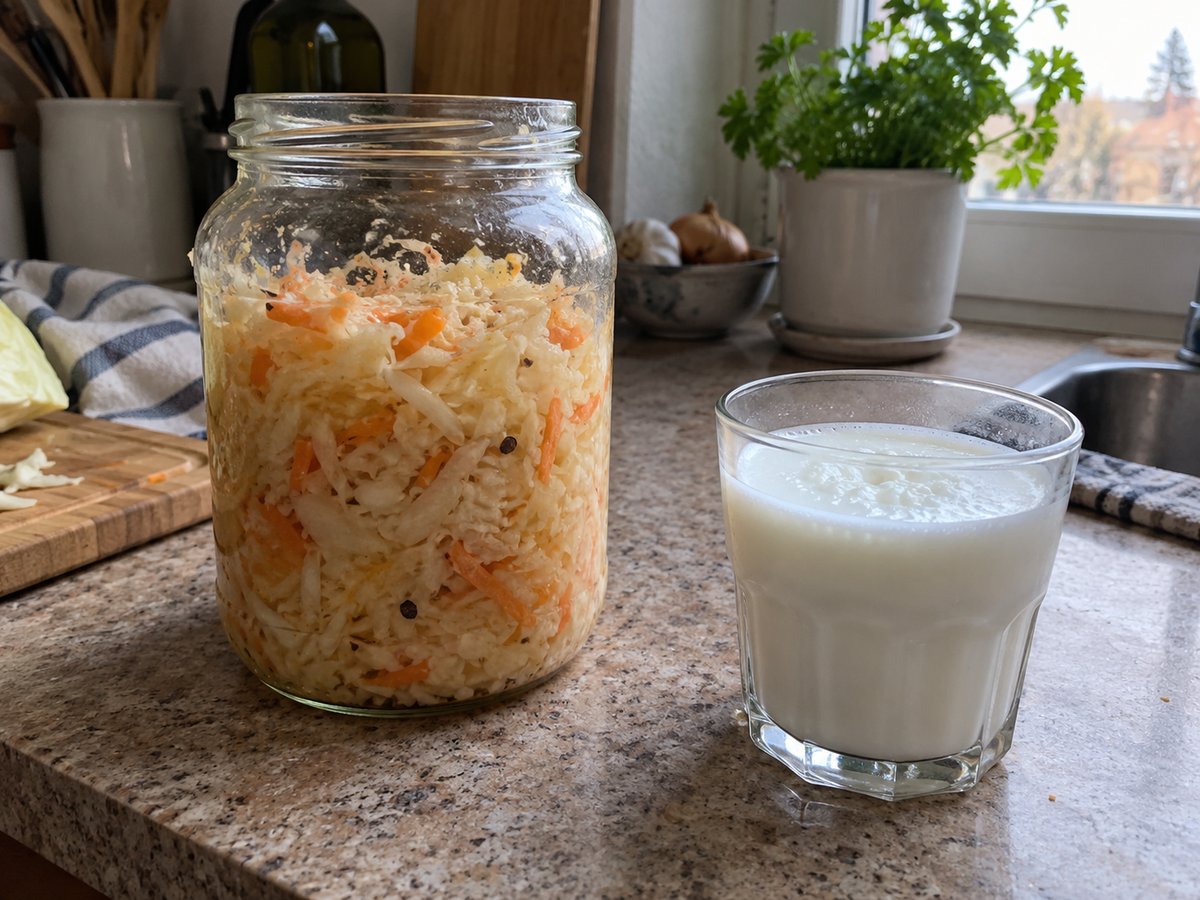
- Fermented foods such as yoghurt, kefir, sauerkraut, kimchi, miso and sourdough are made with microbes. Some still contain live cultures; others, such as baked bread or pasteurised sauerkraut, do not.
One recognised statement in this area is narrow but useful: live yoghurt cultures improve the digestion of lactose in the product for people who have difficulty digesting lactose.
What seems to matter most
Research on the microbiome is young and moving fast. The patterns that keep turning up are unglamorous: a diet with a wide variety of plant foods, plenty of fiber, regular meals, enough sleep and physical activity. Diets high in ultra-processed food and low in plants tend to come out less well in observational studies, though cause and effect are hard to separate.
In everyday life
- Count plants, not products: different vegetables, fruits, grains, nuts, seeds and legumes over a week.
- Raise fiber slowly if your diet is currently low in it.
- Try fermented foods if you enjoy them; they are traditional parts of many cuisines.
- Eat in a calm way when you can. Rushed meals and digestive comfort rarely go together; see mindful eating.
- Sleep and stress affect digestion for many people; see sleep hygiene.
Common confusions
"Gut health can be fixed with one product." No single food or supplement defines it. The overall diet and lifestyle matter more.
"Bloating always means something is wrong with your microbiome." Some bloating after meals, especially fiber-rich ones, is normal.
"Everyone needs a probiotic." Most people do not need one. Their usefulness depends on the specific strain and situation.
Persistent changes in bowel habits, blood in the stool, unexplained weight loss, severe pain or ongoing discomfort are reasons to see a doctor, not to experiment with diet alone.
Added Sep 26, 2026 · Filed under Everyday habits