Home › Rest & recovery › Resting heart rate
Resting heart rate
Also: RHR, resting pulse
What it is and how it works
Every heartbeat pushes blood around the body. When you are sitting still or lying down, the body's demand for oxygen is at its lowest, and so is the number of beats needed to meet it. That number is the resting heart rate.
For most adults, a resting heart rate between 60 and 100 beats per minute (bpm) is considered within the usual range. People who do a lot of endurance exercise often have lower values, sometimes in the 40s or 50s, because a well-trained heart pumps more blood with each beat. Age, genetics, body size, medication and general health also influence the number.
How to measure it
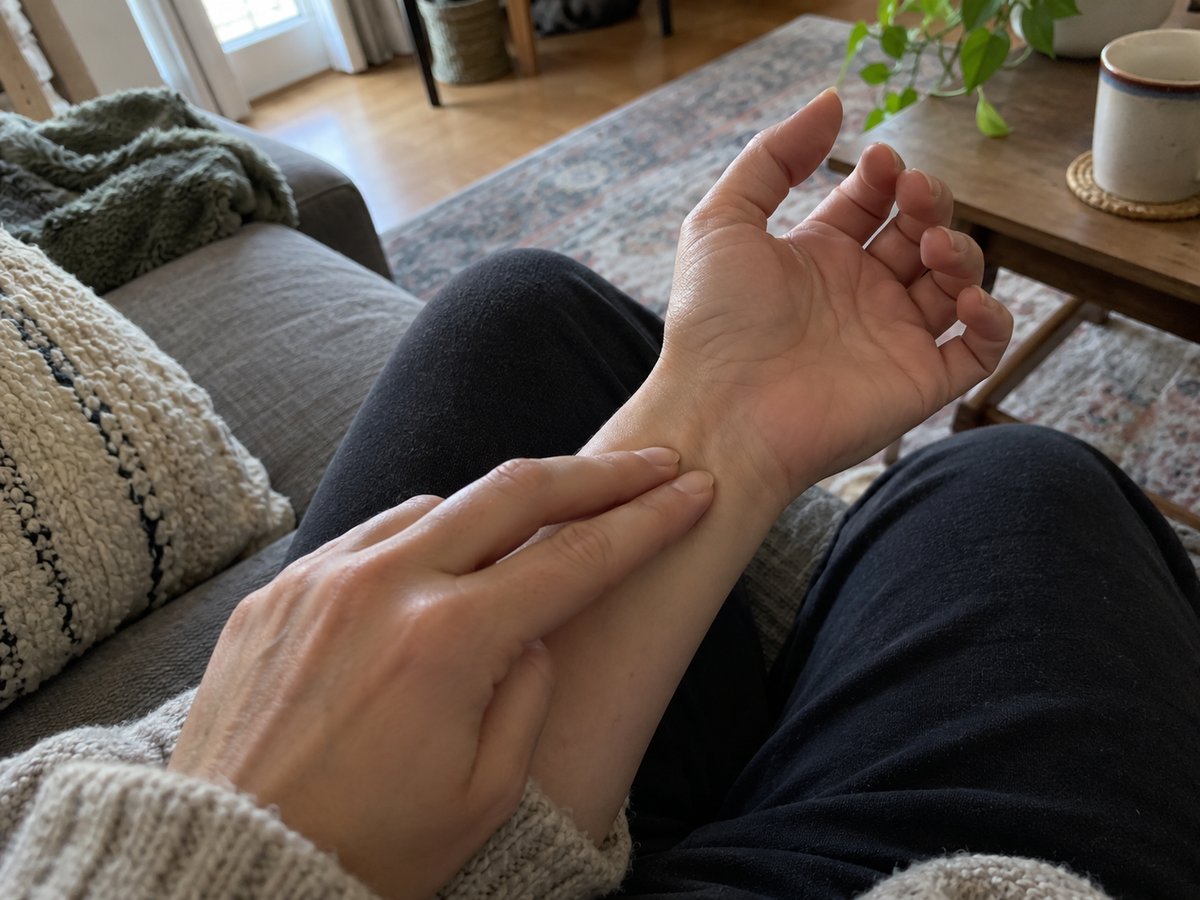
You can feel your pulse at the wrist, on the thumb side below the base of the hand, or at the neck, beside the windpipe.
- Sit or lie quietly for a few minutes, ideally in the morning before getting up.
- Place your index and middle fingers lightly on the pulse point. Do not use your thumb, which has its own pulse.
- Count the beats for 30 seconds and double the number, or count for a full minute.
- Repeat on a few different days to get a typical value.
Fitness trackers and smartwatches estimate heart rate optically through the skin. They are convenient for following trends, though accuracy varies between devices and situations.
What can change it
Many ordinary factors push resting heart rate up for a while:
- stress, excitement or anxiety,
- caffeine and nicotine,
- poor sleep or not enough of it; see sleep hygiene,
- dehydration and hot weather; see hydration,
- illness, including a cold or fever,
- alcohol the evening before,
- hard training without enough recovery.
Regular aerobic activity and good recovery are associated with lower values over time.
In everyday life
- Track a trend, not a single number. One high reading means little; a value that stays clearly higher than your usual for several mornings can be a sign the body needs more rest; see active recovery.
- Same time, same conditions: comparisons are only meaningful if measurements are taken the same way.
- Pair it with how you feel: energy, sleep quality and mood tell you as much as a number.
Common confusions
"Lower is always better." A low resting heart rate is common in fit people, but a slow pulse with dizziness, fainting or breathlessness is a reason to see a doctor.
"Resting heart rate and blood pressure are the same." They measure different things: beats per minute versus the pressure of blood in the arteries.
"A smartwatch reading is a diagnosis." Wearables are useful for trends but are not medical devices for diagnosis.
"Exercise will fix any high reading." If your resting heart rate is regularly above 100 bpm, or you notice palpitations, an irregular rhythm, chest pain or breathlessness, contact a qualified professional promptly rather than adjusting habits alone.
Added Sep 27, 2026 · Filed under Rest & recovery