Home › Food & nutrients › Fiber
Fiber
Also: fibre (British spelling), dietary fiber, roughage
What it is and how it works
Carbohydrates, fats and proteins are taken apart by enzymes and absorbed higher up in the gut. Fiber is the exception. It travels through the stomach and small intestine more or less unchanged, which is why it shapes digestion rather than fuelling it. It adds volume to a meal, holds on to water, and changes how quickly the rest of the food moves along.
Most plant foods contain a mixture of two broad types:
- Soluble fiber dissolves in water and forms a soft gel. Oats, barley, beans, lentils, apples and citrus fruit are good examples. Oat and barley beta-glucan is one of the few fibers with an officially recognised role: eaten in sufficient amounts (around 3 g a day), it contributes to the maintenance of normal blood cholesterol levels.
- Insoluble fiber does not dissolve. It stays bulky, draws in water and helps material move through the intestine. Wheat bran is the classic example; it contributes to an increase in faecal bulk. Whole wheat, nuts, seeds and the skins of vegetables are other sources.
Where fiber is found
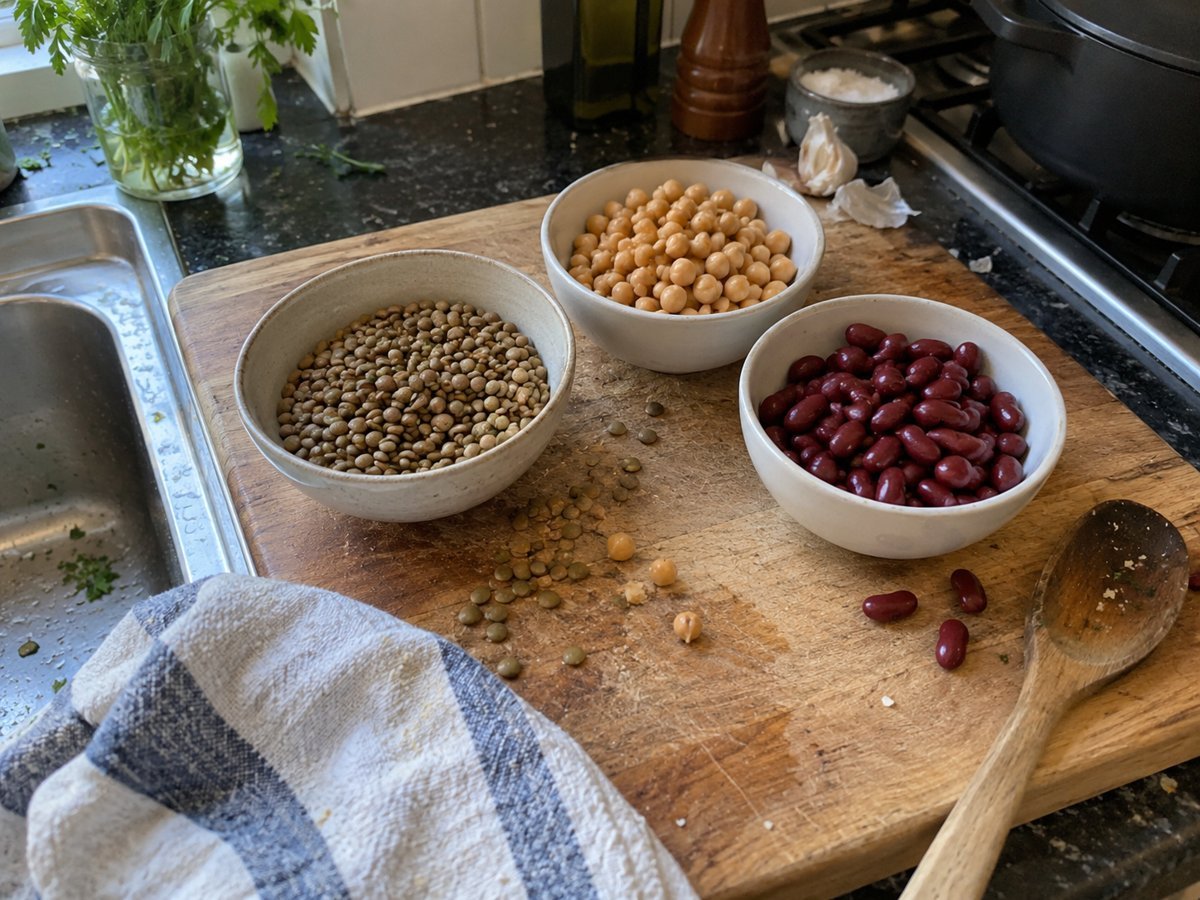
Fiber exists only in plants. Meat, fish, eggs and dairy contain none. The most generous everyday sources are legumes (lentils, chickpeas, beans), whole grains such as oats, barley, brown rice and wholemeal bread, fruit eaten with its skin, vegetables of almost any kind, and nuts and seeds such as chia, flax or pumpkin seeds.
Refining removes much of it. White flour, white rice and most fruit juices keep the starch or the sugar and lose a large share of the fiber that was in the original grain or fruit.

Adding fiber gradually, with water
If your usual diet is low in fiber, a sudden jump can bring bloating, wind and general discomfort while your gut bacteria adjust. Increasing it over two or three weeks is usually more comfortable than changing everything on a Monday morning.
Fluid matters too. Soluble fiber needs water to form its gel and insoluble fiber needs it to stay soft. A fiber-rich diet with very little to drink tends to feel worse, not better; see hydration.
In everyday life
- Simple swaps: porridge oats instead of a refined cereal, wholemeal bread instead of white, brown rice or barley in place of white rice now and then.
- Pantry staples: a tin of chickpeas or lentils can go into soup, salad or a pasta sauce without any extra preparation.
- Toppings: a spoonful of seeds over yoghurt or porridge adds fiber with almost no effort.
- Keep the skin: potatoes, apples and pears keep more of their fiber when you leave the skin on.
Fiber also tends to make meals more filling, which is part of what people mean by satiety, and the fermentable part feeds the bacteria discussed under gut health.
Common confusions
"Fiber is only about regularity." Bowel habits are the best-known part of the story, but fiber also changes how full a meal feels, how quickly it is digested and what reaches the bacteria in the large intestine.
"A fiber powder is the same as high-fiber food." An isolated fiber product usually contains one type of fiber. Whole foods bring a mix of soluble and insoluble fibers together with vitamins, minerals and other plant compounds. If you have a digestive condition, or are thinking about fiber supplements, it is sensible to ask a qualified professional first.
"Fibre and fiber are different things." They are the same word: "fibre" is the British spelling, "fiber" the American one.
Added Sep 11, 2026 · Filed under Food & nutrients