Home › Food & nutrients › Whole grains
Whole grains
Also: wholegrain, whole-grain (adjective), wholemeal (British, for flour and bread)
What it is and how it works
A grain of wheat, rice or oats has three layers. The bran is the tough outer coat, rich in fiber and minerals. The germ is the small part that would sprout into a new plant, holding fats, vitamin E and B vitamins. The endosperm is the large starchy centre that feeds that young plant.
Refining a grain removes the bran and germ and keeps only the endosperm. White flour and white rice are the result: lighter, quicker to cook, longer to keep, but lower in fiber, magnesium, iron and several B vitamins. A whole grain keeps all three parts, even if it has been cracked, rolled or milled into flour.
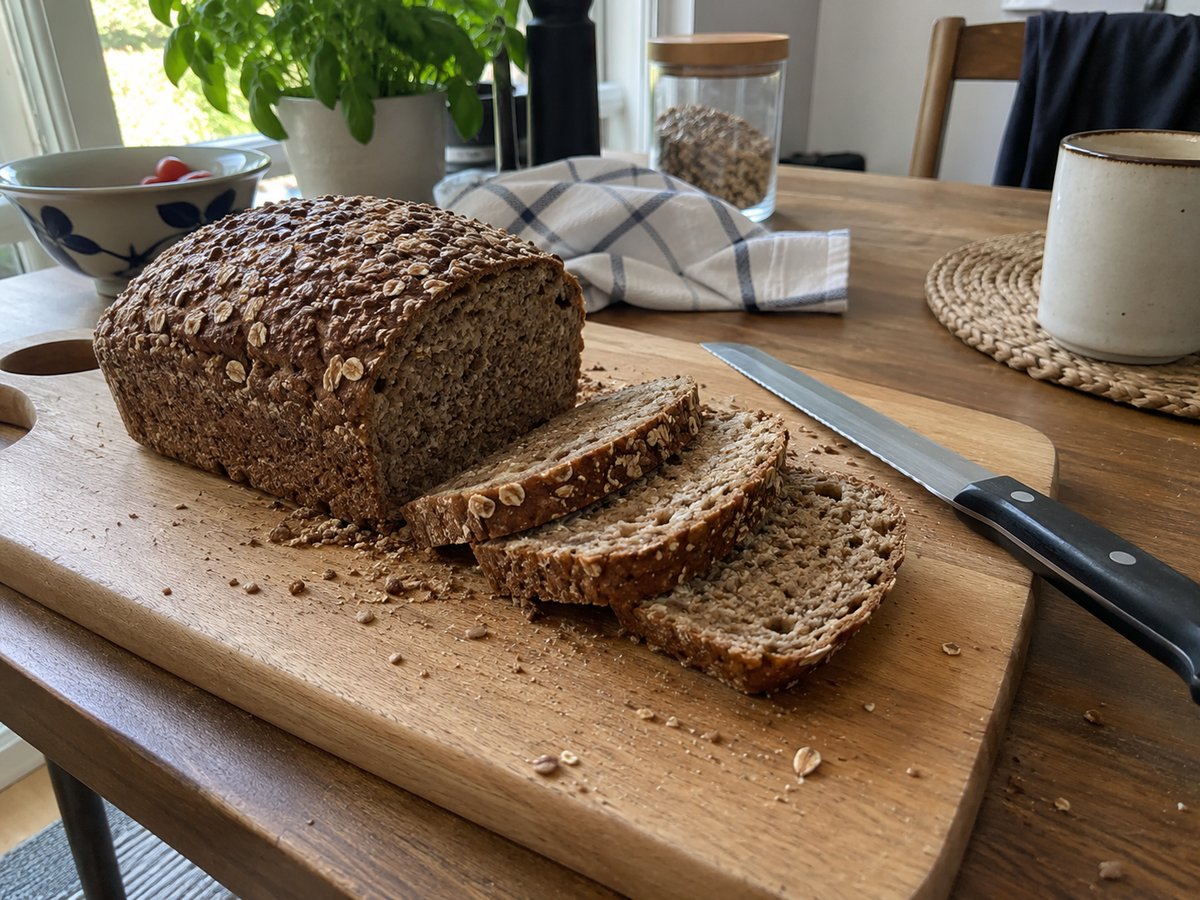
Common examples
- Wheat: wholemeal or whole-wheat flour and bread, bulgur, freekeh.
- Oats: rolled oats, oat flakes and oatmeal are almost always whole grain.
- Rice: brown, red and black rice; wild rice, which is technically a grass seed.
- Others: barley (pot barley rather than pearl), rye, spelt, buckwheat, millet, quinoa and popcorn.
Buckwheat and quinoa are not true cereals botanically, but they are cooked and eaten in the same way and usually included in the group.
Reading a label
Packaging can be misleading. A brown loaf may simply be coloured with malt, and "multigrain" only means several grains, not necessarily whole ones. Look at the ingredients list: a whole grain should be named first, for example "wholemeal wheat flour" or "whole oats". Words such as "enriched flour", "wheat flour" on its own, or "made with whole grains" further down the list usually mean the product is mostly refined.
In everyday life
- Breakfast: porridge oats or a muesli without much added sugar.
- Swap gradually: mix half brown and half white rice, or half wholemeal and half white pasta, until the taste becomes familiar.
- Use the whole range: barley in soups, bulgur in salads, buckwheat pancakes, rye bread.
- Cook ahead: whole grains often take longer to cook. A batch keeps in the fridge for several days.
Because they digest more slowly and bring more fiber, meals with whole grains tend to feel more filling; see satiety.
Common confusions
"Brown means whole grain." Not reliably. Check the ingredients rather than the colour.
"Whole grains are only about fiber." Fiber is the headline, but the bran and germ also bring minerals, vitamins and plant compounds that refined grains lose.
"Gluten-free means whole grain-free." Several whole grains are naturally gluten-free, including oats certified as uncontaminated, buckwheat, millet, brown rice and quinoa. People with coeliac disease should follow the advice of their doctor or dietitian.
"Whole-grain products are automatically healthy." A whole-grain biscuit with lots of sugar and fat is still a biscuit. The grain is one part of the picture; see ultra-processed food.
Added Sep 17, 2026 · Filed under Food & nutrients