Home › Themes › Food & nutrients
Food & nutrients
Nutrients, food groups and the words printed on labels: what they are, where they are found and what they actually do.
- Electrolytesnoun, pluralMinerals that carry an electrical charge in body fluids: mainly sodium, potassium, chloride, magnesium and calcium. They help manage fluid balance and are involved in nerve and muscle function.
- FibernounThe part of plant foods our own enzymes cannot digest. It comes in soluble and insoluble forms and is found only in plants: legumes, grains, fruit, vegetables, nuts and seeds.
- IronnounAn essential mineral needed to make haemoglobin, the protein that carries oxygen in red blood cells. Found in meat and fish (haem iron) and in legumes, greens and grains (non-haem iron).
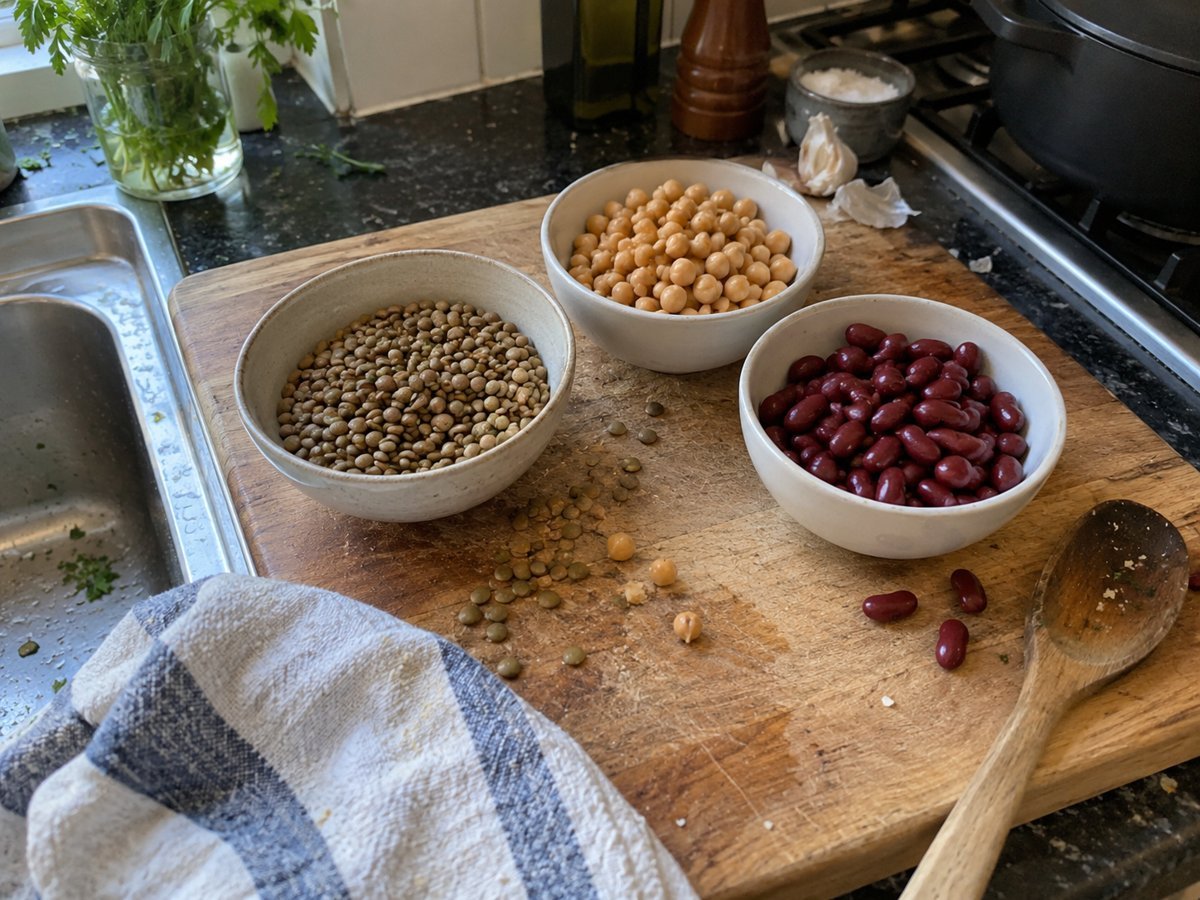
- Legumesnoun, pluralPlants of the pea family and their edible seeds: beans, lentils, chickpeas, peas, soybeans and peanuts. A traditional source of plant protein and fiber.
- MagnesiumnounAn essential mineral found in nuts, seeds, legumes, whole grains and green vegetables. It contributes to normal muscle function, normal energy-yielding metabolism and the reduction of tiredness and fatigue.
- Omega-3nounA family of polyunsaturated fats. ALA comes from plants such as flax and walnuts; EPA and DHA come mainly from oily fish. EPA and DHA contribute to the normal function of the heart.
- ProteinnounOne of the three macronutrients. Built from amino acids, found in both animal and plant foods, and used by the body to build and maintain tissues including muscle and bone.
- Vitamin DnounA fat-soluble vitamin made in the skin under sunlight and found in a few foods. It contributes to the maintenance of normal bones, normal muscle function and normal function of the immune system.
- Whole grainsnoun, pluralCereal grains that keep all three parts of the kernel: bran, germ and endosperm. Examples include oats, brown rice, barley, buckwheat and wholemeal flour.