Home › Food & nutrients › Legumes
Legumes
Also: pulses (dried seeds of legumes)
What it is and how it works
Legumes grow their seeds in pods. Botanists include peanuts, clover and even some trees in the family, but in the kitchen the word usually points to a familiar group: lentils, chickpeas, kidney beans, black beans, haricot beans, split peas, broad beans and soybeans. When these are harvested and dried, they are also called pulses.
Many legumes have a special relationship with soil bacteria that capture nitrogen from the air. This is why they are rich in protein compared with most plant foods, and why farmers rotate them with other crops.
Nutritionally, legumes sit somewhere between a vegetable and a protein food. A portion of cooked lentils brings protein, fiber, slowly digested starch, folate, potassium and iron. They contain little fat, except soybeans and peanuts; soy is also one of the plant sources of the omega-3 fat ALA (see omega-3 fatty acids).
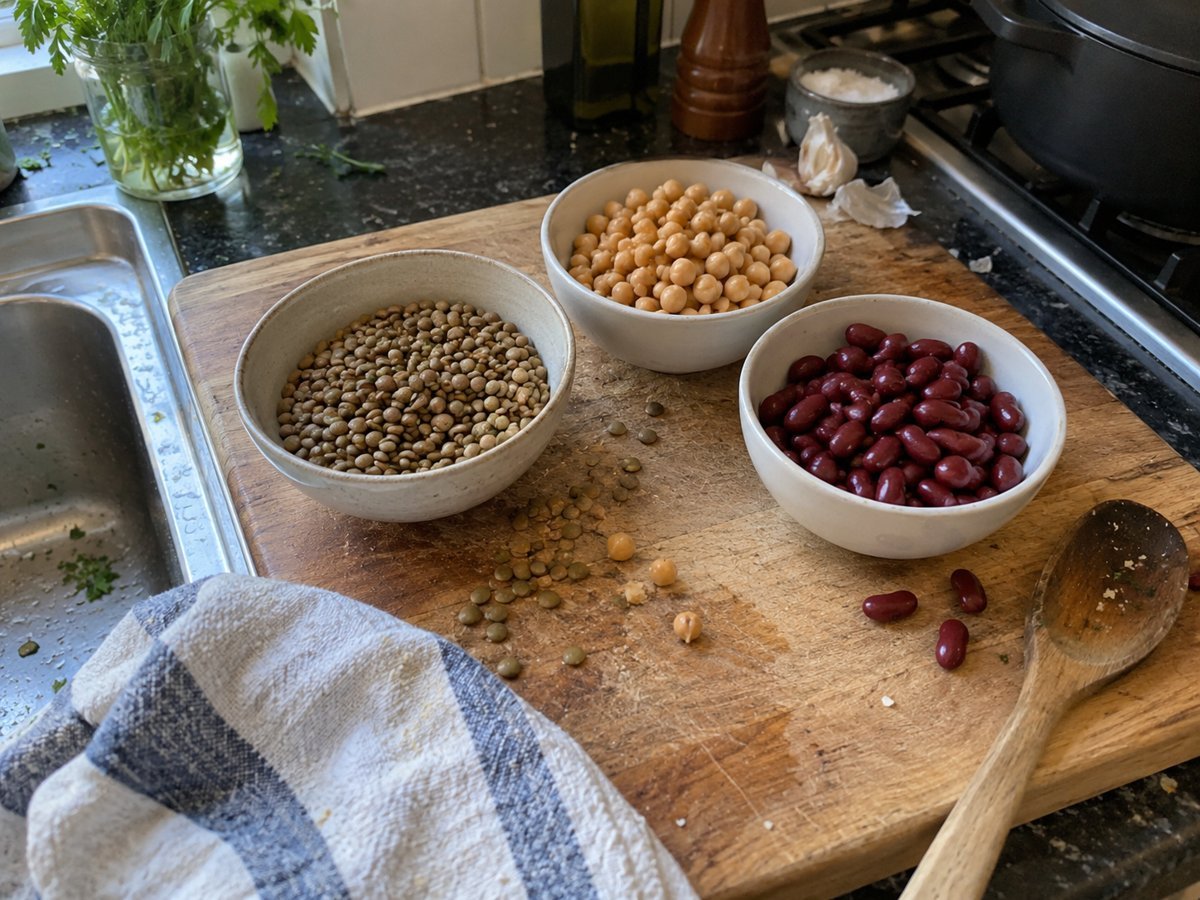
Preparing them
- Tinned legumes are already cooked. Rinsing them reduces some of the salt from the liquid.
- Lentils and split peas cook in 15 to 40 minutes without soaking.
- Dried beans and chickpeas are usually soaked for 8 to 12 hours, drained, then simmered until tender.
- Red kidney beans must be boiled properly. Raw or undercooked kidney beans contain a natural lectin that can cause sharp stomach upset. Boil them hard for at least 10 minutes before simmering, or use tinned ones. Slow cookers on a low setting may not reach a high enough temperature.
Why they cause wind
Legumes contain carbohydrates called oligosaccharides that humans cannot digest. They reach the large intestine, where bacteria ferment them and produce gas. This is normal and generally harmless. Eating legumes regularly in small portions usually makes the effect milder over time, as does rinsing tinned beans and discarding soaking water. The fermentation is part of what links legumes to gut health.
In everyday life
- Soups and stews: a handful of red lentils thickens a soup and disappears into it.
- Spreads: hummus, bean dips and mashed white beans on toast.
- Salads: chickpeas or lentils make a side salad filling enough for lunch.
- Combinations: legumes with whole grains (dal with rice, beans with tortillas, hummus with bread) are classic pairings in many food cultures.
Common confusions
"Legumes are a vegetable, so they don't count as protein." They count as both in many national food guides.
"Peanuts are nuts." Botanically they are legumes, though they are eaten like nuts. Peanut allergy is separate from tree nut allergy, but people can have both.
"Lectins make beans unsafe." Properly cooked legumes are safe for most people; cooking breaks down the lectins.
"Green beans and peas are the same as lentils." Fresh green beans and peas are eaten more as vegetables and contain less protein than dried pulses.
People with specific digestive conditions sometimes need to adjust how much legume they eat; a qualified dietitian can help.
Added Sep 20, 2026 · Filed under Food & nutrients