Home › Movement › Resistance training
Resistance training
Also: strength training, weight training
What it is and how it works
A muscle adapts to what it is asked to do. Ask it repeatedly to lift, push or pull something slightly challenging, and it responds over weeks by becoming stronger and, often, larger. That is the core idea of resistance training.
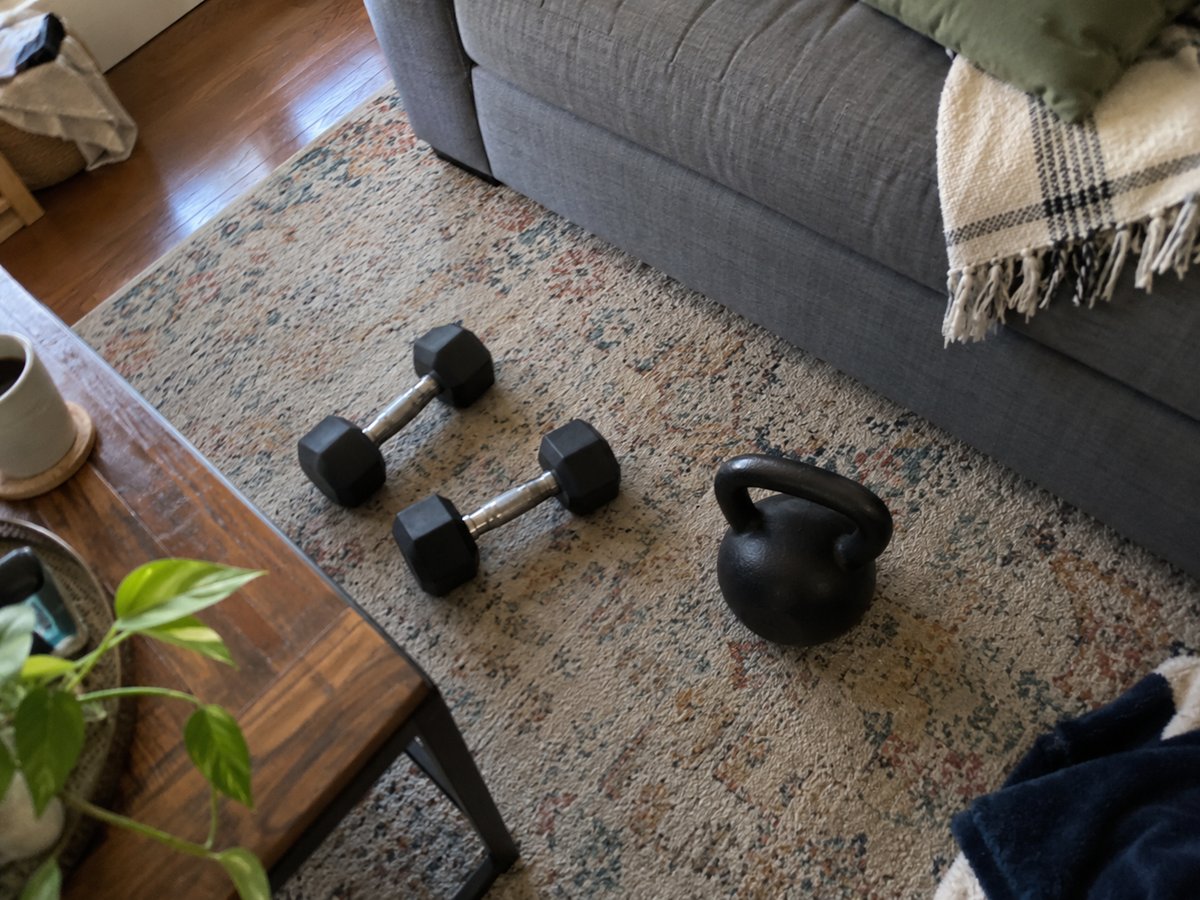
The resistance can take many forms. Body weight is the simplest: squats, lunges, push-ups and planks need no equipment. Free weights such as dumbbells and kettlebells, gym machines, elastic resistance bands, and everyday objects like a backpack filled with books all work too.
The key principle is progressive overload: gradually increasing the challenge as the body adapts, by adding weight, repetitions, sets, or by slowing the movement down. Without some progression, the body has little reason to keep adapting.
A few words you will meet
- Repetition (rep): one complete movement, for example one squat.
- Set: a group of repetitions done without rest, for example ten squats.
- Load: how heavy the resistance is.
- Compound exercises: movements that use several joints and muscle groups at once, such as squats, deadlifts, rows and presses.
- Isolation exercises: movements focusing on one joint, such as a biceps curl.
- Rest interval: the pause between sets.
How often
The World Health Organization's physical activity guidelines advise adults to do muscle-strengthening activities involving all major muscle groups on at least two days a week, in addition to aerobic activity. For older adults, they recommend including activities that challenge balance and strength on three or more days a week to support physical function. Bones respond to this kind of loading too, alongside nutrients such as calcium and vitamin D.
Two or three sessions of 20 to 45 minutes, covering legs, hips, back, chest, shoulders, arms and core, is a realistic structure for many people. Recovery days in between allow muscles to adapt; see active recovery.
In everyday life
- Start with body weight: sit-to-stand from a chair, wall push-ups, step-ups on a stair, glute bridges.
- Learn the movement before the weight: good technique first, then gradual increases.
- Combine with range: moving through a full, controlled range of motion builds mobility at the same time.
- Feed the work: muscle growth and maintenance depend partly on adequate protein.
- Everyday strength counts: carrying shopping, lifting children and digging the garden are resistance work too, and add to NEAT.
Common confusions
"Lifting weights makes everyone bulky." Building large muscles takes years of specific training and eating. For most people, resistance training brings strength and a firmer feel rather than bulk.
"It's only for young people." Muscle mass and strength decline with age, and resistance training is widely recommended for older adults, adapted to their abilities.
"Cardio is enough." Aerobic exercise and strength training work differently; guidelines include both.
"You need a gym." Body weight and simple equipment are enough to make real progress.
Anyone with a heart condition, high blood pressure, a recent injury, or who is pregnant, should get advice from a doctor or qualified exercise professional before starting a new programme.
Added Sep 30, 2026 · Filed under Movement